




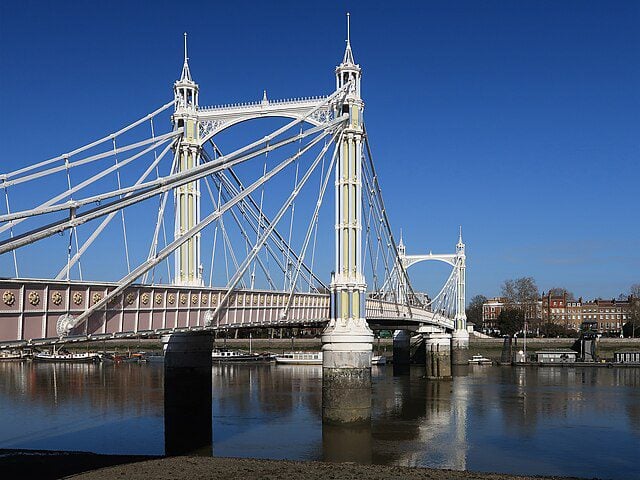
Engineering teams are conducting urgent investigations into one of London’s most historic river crossings after routine maintenance revealed problems requiring immediate action at the 150-year-old Albert Bridge.
The Victorian structure linking Battersea and Chelsea has been closed to all vehicle traffic whilst specialists analyse findings from scheduled inspections, with concerns serious enough to warrant shutting the Grade II listed bridge as engineers determine necessary repairs.
Kensington and Chelsea Council confirmed the closure follows issues identified during standard maintenance work on the crossing, which first opened to the public in 1873 and represents one of only two London bridges never replaced in their entire operational history.
Pedestrians can continue using the route across the Thames, but motorists face significant diversions via neighbouring Chelsea Bridge and Battersea Bridge while the vehicle prohibition remains in effect.
Council officials have not disclosed specific details about the nature of concerns raised during the inspection, stating only that expert teams require time to properly assess the situation before determining appropriate remedial measures.
The bridge’s age and architectural significance demand continuous monitoring and specialized care, according to Councillor Johnny Thalassites, the authority’s lead member for environment and planning, who emphasized that constant maintenance attention is essential for the Victorian structure.
Safety considerations drove the decision to immediately prevent vehicular access while engineers conduct their detailed analysis. “The safety of the bridge’s users is our absolute priority, so we have taken the precautionary step of closing the bridge to vehicles to allow our expert teams to carry out further investigations,” Thalassites confirmed.
Council representatives indicated that investigative work is advancing rapidly, though no timeline has been provided for when normal traffic operations might resume across the historic crossing.
Albert Bridge shares unique status with Tower Bridge as London’s only two Thames crossings that have survived without replacement since their original construction, making preservation efforts particularly important for maintaining the capital’s architectural heritage.
The ornate structure has required careful stewardship throughout its operational life due to its distinctive design and construction methods typical of the Victorian engineering era.
Traffic management systems have been implemented around the closure zone to redirect vehicles toward alternative river crossings, with transport authorities monitoring congestion levels on diverted routes during the investigation period.
The council has committed to providing updates as engineering teams complete their assessment and develop plans for addressing whatever structural issues prompted the precautionary shutdown.
Authorities will determine the bridge’s reopening schedule based on findings from the ongoing technical analysis and any repair work required to ensure safe passage for vehicles returning to the 150-year-old crossing.
