




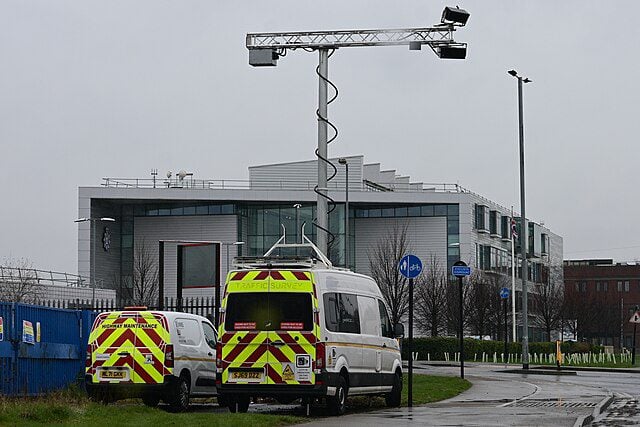
Commuters passing through London Bridge station are now being scanned by live facial recognition cameras, even as the Metropolitan Police defends similar technology against a landmark legal challenge in the High Court.
The controversial surveillance system, operated by British Transport Police, represents the opening phase of a six-month trial that will extend to multiple rail hubs across the capital in coming months.
The timing coincides with legal proceedings brought by campaigner Shaun Thompson and Big Brother Watch director Silkie Carlo, who are challenging the Met’s deployment of the same face-scanning technology. Their case, heard in late January, marks the first judicial review targeting what privacy advocates call “intrusive technology” operating without parliamentary approval.
Thompson, who was detained for approximately half an hour outside London Bridge Tube station last February after triggering an alert, characterized the surveillance as “stop and search on steroids.” Officers requested his fingerprints during the encounter, which he declined to provide before being released after presenting passport documentation.
The railway trial operates by scanning commuters’ faces and cross-referencing them against databases containing individuals wanted for serious criminal matters. When the system flags a potential match, human officers conduct verification checks before taking action.
British Transport Police emphasized that the pilot deployment at London Bridge follows months of preparation. Ch Supt Chris Casey, the senior officer directing the initiative, stated the technology would be evaluated specifically for railway environments, with the objective of creating an unwelcoming environment for those evading justice on serious charges.
Passengers wishing to avoid the scanning zone will have access to alternative pathways, according to transport police. The force says facial data from individuals not appearing on authorized watchlists will be immediately erased.
Metropolitan Police legal representatives told the High Court that the technology delivered substantial results, with 801 arrests directly attributed to facial recognition systems through mid-September of last year. Barrister Anya Proops KC, representing the force, argued the privacy impact on the general public remained “only minimal” while serving the critical function of public protection.
However, Matthew Feeney from Big Brother Watch described subjecting ordinary passengers to “mass biometric surveillance” as disproportionate. The advocacy manager highlighted the absence of UK regulations governing facial recognition, leaving individual police departments to establish their own operational guidelines and watchlist criteria.
Feeney questioned the democratic legitimacy of deploying such technology without public consultation or parliamentary authorization in a democratic society.
Transport police will collect public input throughout the trial period via QR codes on station signage. All deployment locations and dates will be published online ahead of operations, allowing travelers to plan accordingly.
