



A west London council is under pressure to find millions of pounds to restore one of the capital’s most recognisable bridges, after a structural fault forced its closure earlier this year — and disputes over who should pay are complicating efforts to reopen it quickly.
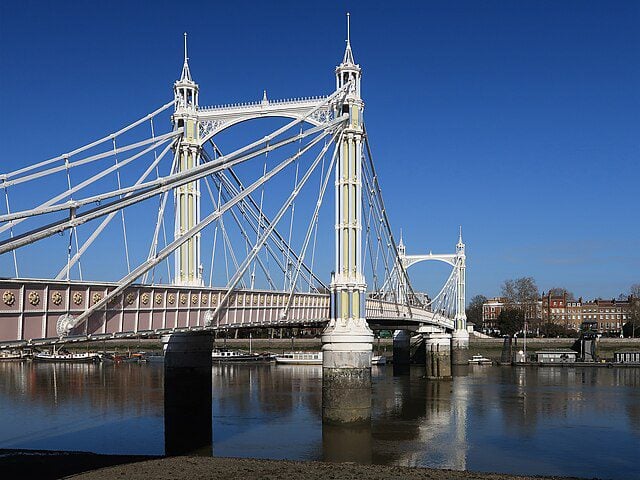
Albert Bridge, which has spanned the Thames for 150 years, was shut to vehicles in February after engineers identified cracks in a cast-iron component. While pedestrians and cyclists can still cross, around 15,000 cars and light vans are being redirected to alternative crossings every day.
The repair bill is estimated at £8.5 million. Kensington and Chelsea Council, which bears sole responsibility for the Grade II* listed structure, is set to consider adding the project to its 2026-27 capital programme at an upcoming leadership team meeting.
In the meantime, the council is spending £56,000 every month maintaining temporary safety measures, while initial emergency works already under way are projected to cost approximately £550,000. The full repair programme — which involves fixing a rocker bearing plate and freeing a seized axle — is expected to take up to a year, owing to the bridge’s complex Victorian-era construction.
The council has written to both Transport for London and the Department for Transport seeking financial contributions. However, its own report acknowledges that the timescale for securing such funding may not align with its aim of reopening the bridge as quickly as possible.
The funding dispute sits within a broader conversation about how London’s river crossings are managed. Road bridges across the Thames in the capital fall under the responsibility of just six of London’s 32 boroughs, a distribution that Kensington and Chelsea is now formally raising with the London Assembly.
BBC London’s transport correspondent Tom Edwards noted that while officials do not expect a repeat of the Hammersmith Bridge situation — which saw a seven-year closure — the case illustrates a longer-running structural problem. When the Greater London Council was abolished in 1986, he explained, responsibility for significant pieces of infrastructure was passed to individual boroughs, many of which have since struggled to fund their upkeep. Observers, he said, have described this as a systemic failure.
The Department for Transport pointed to a £1 billion investment in local highways and a new structures fund, though the fund is still being finalised. Once operational, local authorities including Kensington and Chelsea will be able to submit bids for consideration. TfL said it would work with the borough on proposals for reopening.
The London Assembly has been approached for comment.
Trending
- Kensington And Chelsea Council Faces £8.5m Bill To Fix Victorian Albert Bridge As Funding Rows Slow Repair Timeline
- Two Men To Face Old Bailey Over Lewisham Aggravated Burglary Death
- Counter-Terrorism Police Launch Investigation Into Golders Green Ambulance Arson As 264 Extra Officers Deployed To Protect Jewish Communities Before Passover
- Counter Terrorism Police Take Over Golders Green Jewish Ambulance Arson Investigation As Online Claim Of Responsibility Emerges
- Met Police Officer Dismissed After Misconduct Panel Rules He Was Unfit To Police Muslim Communities
- Dozens Of Golders Green Residents Evacuated In Middle Of Night After Explosions Rocked Jewish Ambulance Base
- Wembley Shop Owners Say They Cannot Sleep And Have Lost Staff After Masked Youths Trash Businesses In Repeat Attacks
- Teen Labourer Fell Six Floors To His Death Through Poorly Covered Ventilation Shaft At West London Building Site
Kensington And Chelsea Council Faces £8.5m Bill To Fix Victorian Albert Bridge As Funding Rows Slow Repair Timeline

Henry Caldwell
Oversees editorial operations and contributes articles across multiple categories, ensuring accuracy, quality, and reliable reporting.
Add A Comment