




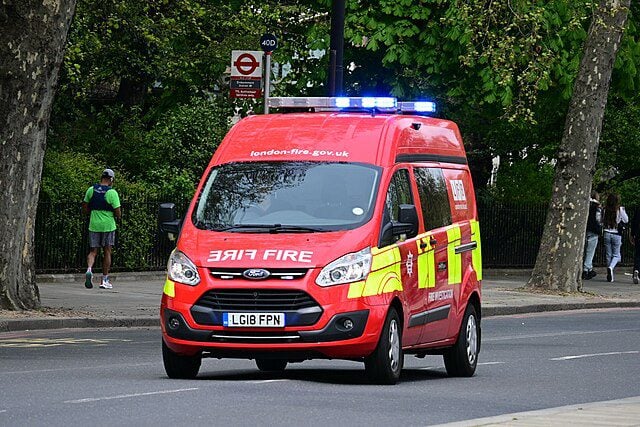
Emergency response performance across England remains under intense scrutiny, as official national targets for ambulance, police and fire services continue to face operational pressure.
While borough-level consolidated comparisons for London are not routinely published in one single dataset, publicly available national standards and service frameworks reveal clear benchmarks against which performance can be measured.
⸻
Ambulance Response Times – Official Targets vs Operational Pressure
Under standards set by NHS England, ambulance response times are categorised as follows:
• Category 1 (life-threatening emergencies)
Target average: 7 minutes
90% of calls should be reached within 15 minutes.
• Category 2 (serious emergencies including strokes and chest pain)
Target average: 18 minutes
90% should be reached within 40 minutes.
These targets apply nationally, including services operated by London Ambulance Service.
In recent years, NHS operational updates have acknowledged significant strain on ambulance services due to:
• Rising demand for emergency care
• Delays in hospital handovers
• Staffing shortages
• Seasonal pressure spikes
Health system analysts have repeatedly warned that sustained delays in Category 2 response times can increase risk in time-critical medical cases such as strokes and severe cardiac events.
Although improvement measures are ongoing, national performance reports have shown that meeting the 18-minute Category 2 target consistently remains challenging across parts of England.
⸻
Police Emergency Response Expectations
Emergency calls handled by the Metropolitan Police are graded by urgency and threat level.
Government performance frameworks and public policing standards generally expect:
• Rapid dispatch for immediate threat incidents (Grade I / 999)
• On-scene attendance typically targeted within approximately 15 minutes in urban environments for high-priority calls
Urban policing faces additional operational challenges including:
• High call volumes
• Officer availability
• Major incident redeployment
• Traffic congestion
Although overall response frameworks exist, borough-level public breakdowns of on-scene response times are not consistently consolidated in one transparent ranking.
Fire Brigade Operational Standards
The London Fire Brigade operates under response standards designed to ensure rapid first attendance to life-threatening incidents.
Operational expectations typically aim for:
• First appliance arrival within approximately 6–8 minutes, depending on incident type and risk category.
Fire services historically maintain more consistent response performance relative to other emergency sectors, though times can vary based on:
• Distance to nearest station
• Road conditions
• Concurrent major incidents
What Is Not Publicly Consolidated
At present, there is no single publicly accessible London-wide report ranking all boroughs side-by-side for:
• Ambulance Category 1 & 2 average response times
• Police on-scene attendance times
• Fire first attendance times
in one unified borough comparison.
This lack of consolidated borough transparency makes it difficult for residents to directly compare emergency service performance across different areas of the capital.
Demand Trends and System Pressure
Across England, emergency services have experienced:
• Increased 999 call volumes
• Growth in complex medical emergencies
• Higher operational demand post-pandemic
• Workforce retention challenges
Public policy experts have repeatedly highlighted that urban centres like London face compounded pressure due to population density and infrastructure strain.
Why Borough-Level Transparency Matters
In time-critical emergencies such as:
• Cardiac arrest
• Severe trauma
• Major fires
• Violent assaults
Every minute can influence survival and outcome.
Clear borough-level performance data could:
• Strengthen public confidence
• Improve accountability
• Support targeted resource allocation
• Inform local policy debate
London Chronicle Position
London Chronicle is seeking further clarification on borough-level emergency response performance and will continue monitoring official releases from NHS, policing authorities and fire services.
As public demand for transparency grows, consolidated and accessible performance reporting may become increasingly central to public trust in London’s emergency infrastructure.
