




Millions of London commuters will face higher fares on the Tube, Overground, DLR and Elizabeth line from 1 March, with prices rising by 5.8 percent across the network in an increase that sits one percentage point above the current rate of inflation.
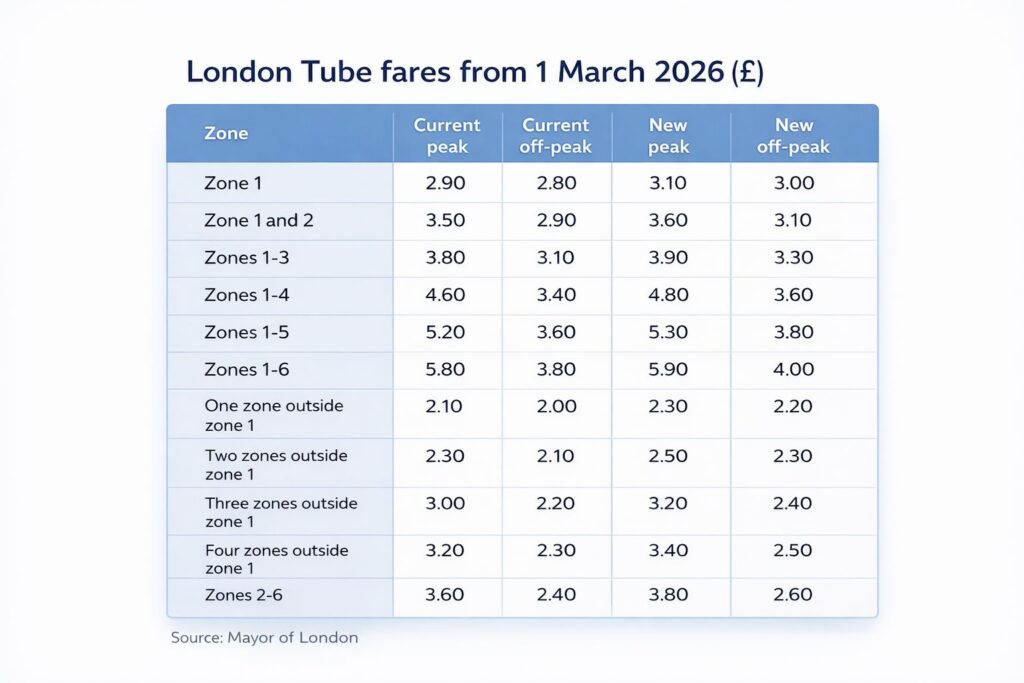
The rise, confirmed by Transport for London, means a single pay-as-you-go fare within Zones 1 to 6 will go up by no more than 20p, with many journeys increasing by 10p. Peak travel within Zone 1 will move from £2.90 to £3.10, while off-peak and weekend journeys on the same routes will rise from £2.80 to £3.00. One of the more significant individual increases falls on the Elizabeth line, where a single fare from Zone 1 to Heathrow will climb from £13.90 to £15.50. The river bus and IFS Cloud Cable Car services will also see fares go up.
The increase is tied directly to a funding agreement struck between TfL and central government during last June’s spending review, under which TfL secured £2.2 billion in capital funding on the condition that fares rise in line with that formula.
Mayor Sir Sadiq Khan has moved to cushion part of the blow for lower-income passengers by freezing bus and tram fares until 5 July 2026, describing the move as an emergency cost-of-living measure. Weekly and daily Travelcard prices and pay-as-you-go caps have also been frozen until 2027, meaning regular commuters using capped travel will not see their weekly costs rise in line with the individual fare increases.
Khan said the bus and tram freeze would particularly benefit those on the lowest incomes, noting it was the seventh time those fares had been held.
The response from passenger groups has been muted. London TravelWatch acknowledged the partial protections but described the overall package as a bittersweet pill for commuters already dealing with a cost-of-living crisis and some of the most expensive public transport fares in Europe. The watchdog said TfL would need to demonstrate it was delivering genuine value for money in return.
TfL’s chief customer and strategy officer Alex Williams said revenue generated through fares was reinvested directly into improving services across the network.
The changes take effect from Saturday 1 March.
