




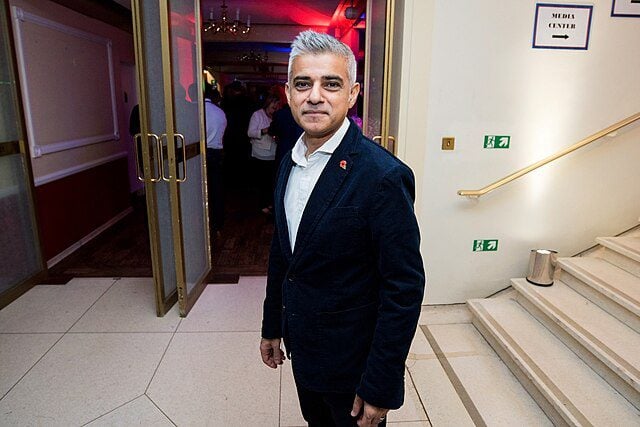
Sir Sadiq Khan is facing growing criticism from across the political spectrum for declining to halt the construction of leasehold properties on developments backed by City Hall, despite his long-standing rhetoric against what he has called a “feudal” system of home ownership.
Why the Capital’s Leasehold Problem Is Distinct
London’s exposure to the leasehold question is unlike anywhere else in England. More than a third of homes in the capital are held under leasehold arrangements — more than double the national proportion — a reflection of the city’s unusually high concentration of flats, which are leasehold by default under the existing legal framework.
The consequences for Londoners who own leasehold flats have become increasingly severe. Harry Scoffin, founder of the campaign group Free Leaseholders, told the Local Democracy Reporting Service that residents were surrendering ever larger sums to freeholders while sliding into negative equity, often unable to sell because of spiralling service charges. He pointed to figures from estate agent Hamptons showing that although flats accounted for roughly 60 per cent of London home sales last year, they were responsible for around 90 per cent of all losses recorded — a disparity that speaks to the structural disadvantages built into leasehold ownership.
The policy context is shifting, though not quickly enough for many critics. The Draft Commonhold and Leasehold Reform Bill, published in January 2026, is intended to make commonhold — a form of freehold typically applied to flats that allows homeowners independence from a wider building’s landlord — the default tenure for new developments. But the reforms will not take effect retrospectively, leaving existing leaseholders in what Mr Scoffin described as a two-tier regime.
What Happened at Mayor’s Question Time
The immediate confrontation took place on 26 March, at Sir Sadiq’s final Mayor’s Question Time before the May elections. Conservative Assembly Member Andrew Boff challenged the Mayor to suspend any development backed by mayoral funding that was using leasehold as its primary tenure, and to convert existing schemes to grant residents a share of the freehold.
“You are actively involved in new developments that have leasehold as the main tenure,” Mr Boff told Sir Sadiq. “You could do it now — you could convert all those developments to a share of freehold, giving those residents control over their destiny, but you are still backing leasehold with mayoral money.”
The Mayor declined. His defence centred on the conditions attached to central government funding routed through the Greater London Authority under the Affordable Homes Programme, which runs from 2021 to 2026. Part of that programme involves the construction of shared ownership homes, which are leasehold by default. “It’s not mayoral money — it’s government money that comes with conditions attached,” Sir Sadiq said, noting that the GLA was obliged to abide by terms set by the Ministry for Housing, Communities and Local Government while working with councils, housing associations and developers to deliver desperately needed homes.
He pointed to measures his administration had taken on the issue, including a requirement for 990-year leases on shared ownership homes, a published leasehold guide for Londoners, and a service charges charter. In December, he had told Assembly Members that the rules surrounding earlier MHCLG funding could not be altered, but that future arrangements would aim to make commonhold the standard.
Mr Boff’s response was blunt: “Under your mayoralty, we will continue with leasehold — that’s basically what you’ve just said.”
The Political Calculation Behind City Hall’s Reluctance
For Sir Sadiq’s critics, the dispute is less about legal obligations than about political will — and specifically about his unwillingness to pick a fight with a Labour government on which he depends for funding and alignment. Green Party Leader and Assembly Member Zack Polanski was scathing, accusing the Mayor of hypocrisy. Sir Sadiq had spent years denouncing leasehold as a feudal system, Mr Polanski argued, only to refuse to commit to ending new-build leasehold developments in the capital.
“The Labour hypocrisy knows no ends,” he said. “What do they stand for other than to protect wealth and power?”
The Green leader has been positioning the issue as a pressure point ahead of the May elections — a calculation Mr Scoffin openly acknowledged. The housing campaigner said it was unsurprising that Mr Polanski was seeking to capitalise on the question to erode Labour’s vote in London. His own verdict on the Mayor was more pointed still: rather than acting as a caring and strong Mayor willing to challenge an unpopular government captured by vested interests, Sir Sadiq was backing what Mr Scoffin called tokenistic reforms that would keep the ground rent system running until 2068 while abandoning existing leaseholders to a two-tier regime.
There was, he argued, scant evidence the Mayor was pressing the government to end leasehold entirely, as Labour had promised in its election manifesto. The May elections, he suggested, would offer leaseholders an opportunity to register their dissatisfaction directly at the ballot box.
Government Funding, Political Loyalty and the Limits of Mayoral Power
At the heart of the dispute lies a genuine structural question about how much room for manoeuvre the Mayor of London actually possesses. The Affordable Homes Programme channels central government money through City Hall under conditions set by Whitehall. Breaking those conditions unilaterally could jeopardise the delivery of social housing at a moment when the capital’s housing shortage is acute. Sir Sadiq has consistently been reluctant to rupture any agreement underpinning that funding pipeline.
But the counter-argument, advanced by his critics across the Conservative, Green and campaigning worlds, is that a Mayor willing to exercise political authority could have used the GLA’s leverage to push back — either by converting existing schemes to share-of-freehold arrangements or by refusing to sign off on future leasehold developments. The fact that he has chosen neither course is, for his opponents, the telling detail.
Whether the Draft Commonhold and Leasehold Reform Bill eventually delivers the wholesale shift campaigners are demanding remains to be seen. The legislation, as currently drafted, will establish commonhold as the default for new builds but leaves the existing leasehold estate largely untouched. For the hundreds of thousands of Londoners already trapped in leasehold arrangements — facing escalating service charges, dwindling sale prospects and the ever-present risk of negative equity — the question of what their elected representatives are prepared to do on their behalf is no longer an abstract policy debate. It is, as the May elections approach, becoming a test of political credibility.
