




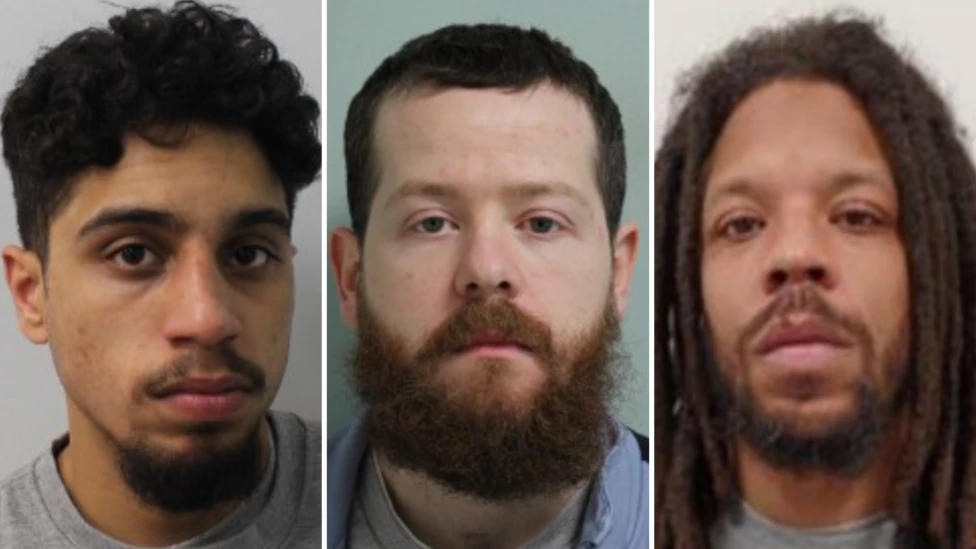
Three men who lay in wait for a teenage drug runner before stabbing him to death in a west London park have been handed life sentences totalling a minimum of nearly 80 years, after their downfall was sealed by an electronic tag worn by one of the killers.
Daniel Matos, 24, Keith Preddie, 34, and Joshua Cowley, 29, were sentenced at the Old Bailey on Thursday for the murder of 19-year-old Tyler Donnelly, who was knifed in Hanworth Park, Feltham, on the night of 24 January 2024. Matos was ordered to serve a minimum of 27 years and six months, Preddie at least 27 years, and Cowley a minimum of 25 years before they can be considered for parole.
Sentencing the trio, Judge Mark Dennis KC condemned what he described as a “brutal and cowardly attack” on a teenager who had been “outnumbered and had no opportunity to try and defend himself.” The judge noted that Matos had been involved in three acts of violence over the course of 10 months and had been fitted with the ankle tag after receiving a suspended sentence for drug dealing.
Donnelly, a self-described Tottenham Hotspur fan, had cycled into the park that evening as a runner for a local drug-dealing operation linked to a phone number known as the “John line”. He was carrying close to 30 wraps of heroin and crack cocaine and £300 in cash. Rather than meeting customers, he was stabbed in the neck. His body was discovered in the grass the following morning, the drugs and money still on him.
The court heard the attack itself was over in around five minutes. It was neither captured on CCTV nor witnessed by any passer-by. The defendants then cycled out of the park, with Matos changing his clothes at a friend’s address while Preddie and Cowley returned to Cowley’s home.
What undid them was the device strapped to Matos’s ankle. Data from the court-imposed GPS tracker placed him at the precise spot where Donnelly’s body was found. Detectives also recovered a hoodie from Matos’s bedroom that was stained with the teenager’s blood, and his DNA was found on an unlit cigarette discarded next to the body. Hours of CCTV pieced together by Metropolitan Police investigators showed Donnelly entering the park shortly after 9pm, with the three men cycling in and out a short time later.
Matos, of Hounslow, Preddie, of Feltham, and Cowley, also of Hounslow, all denied any involvement and told officers in interview that they had never met Donnelly. They were convicted following a retrial after the first trial ended without a verdict.
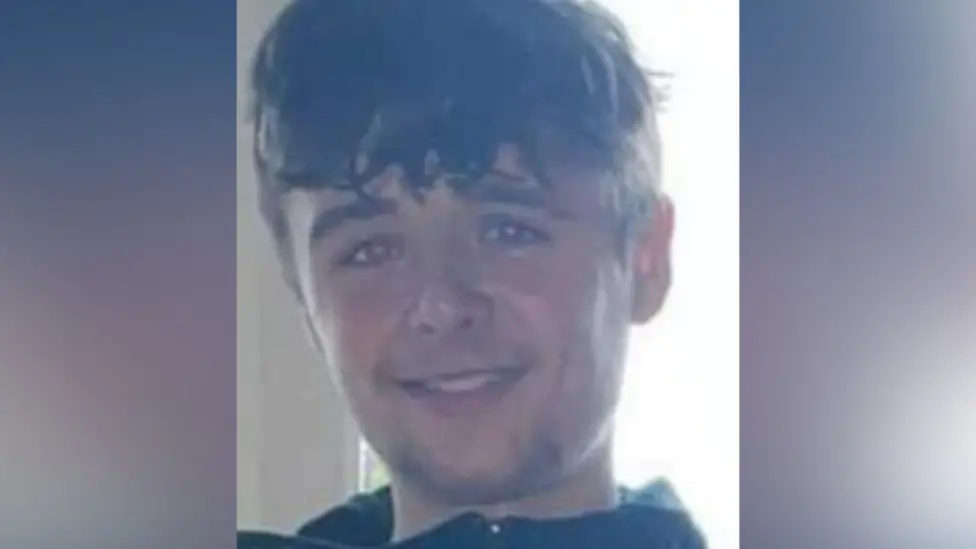
In a victim impact statement read at the Old Bailey, Donnelly’s grandmother Shelley Packman remembered him as a “football-mad” young man who was cheeky, funny and kind-hearted, with a particular soft spot for his dog Archie. She told the court that sitting through two trials had taken its toll on the family, and accused the defendants of laughing in the dock and showing “no remorse and no humanity.”
“He should have walked through the door,” she said. “Instead, he was left in a field in the dark on his own.”
Detective Chief Inspector Brian Howie, who led the Metropolitan Police homicide investigation, said the sentence reflected the “brutal and targeted attack” on the teenager, calling it a “shocking act of violence, carried out with a complete disregard for its devastating consequences.” Paying tribute to Donnelly’s relatives, he added that their “strength and dignity throughout this case has been remarkable.”
The Met said the case underlined the corrosive link between the drugs trade and serious violence on the streets of the capital. The force has pointed to thousands of weapons taken off London’s streets in the past year as part of its continuing effort to tackle knife crime, an issue that remains high on the political agenda in the capital.
For Donnelly’s family, however, the verdicts and lengthy minimum terms can only go so far. As his grandmother put it, the teenager was taken from them in “the most cruel and horrific way” — a young life cut short in a public park within sight of his own home.
