




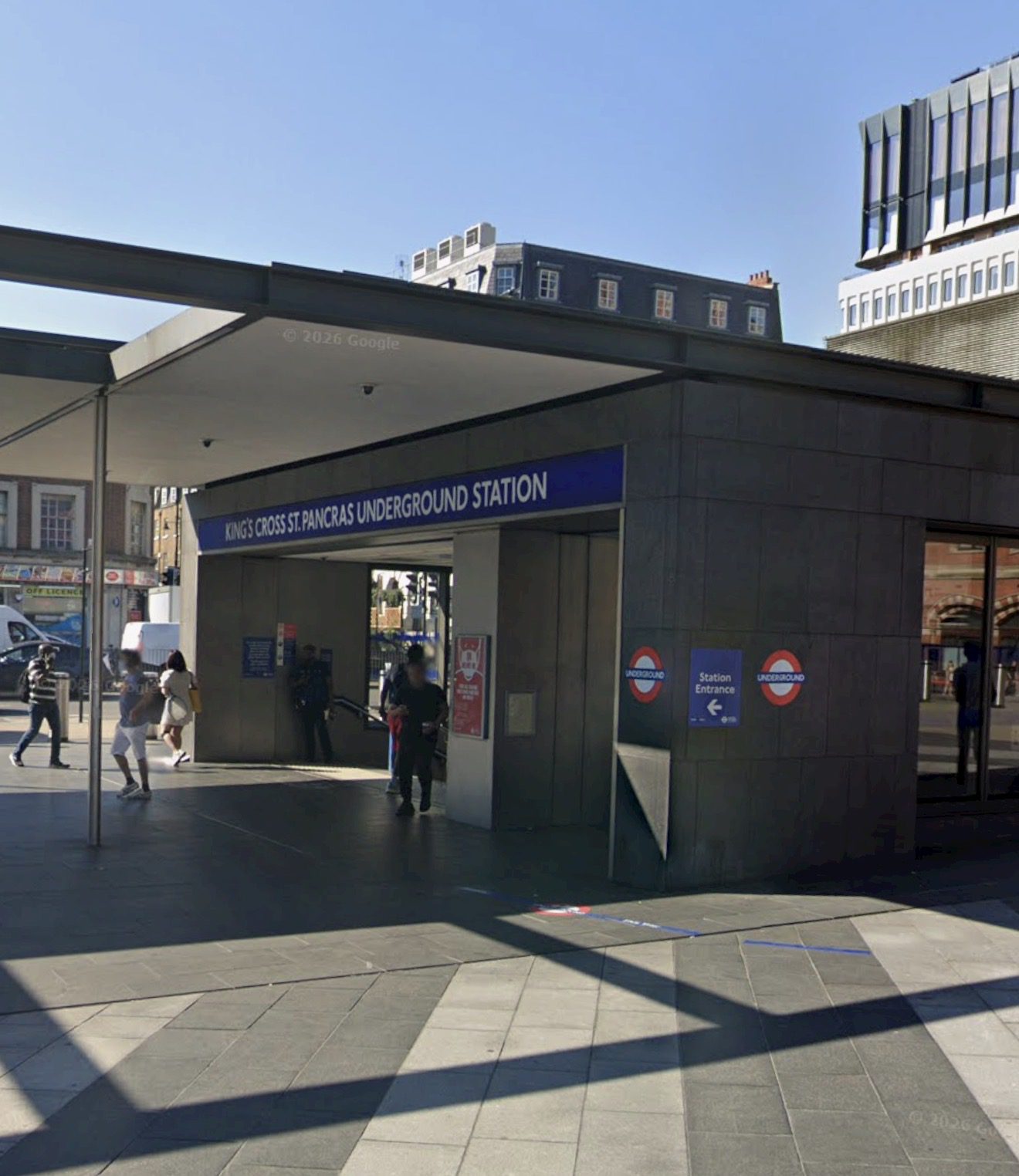
As RMT drivers prepare to walk out on 21 and 23 April, a London Chronicle analysis finds the spring strike wave could cost the capital more than £1.8 billion — and the hidden bill is landing in commuters’ pockets and small business tills, not just TfL’s budget.
The Tuesday nobody is budgeting for
At noon on Tuesday 21 April, roughly 1,800 London Underground drivers belonging to the RMT union will begin the first of six 24-hour walkouts spread across April, May and June. The headlines will focus on the drama — the four-day working week dispute, the closed stations, the inevitable photographs of heaving platforms at Waterloo and King’s Cross. But the real story is a number the unions and TfL both quietly avoid in their press statements.
£230 million.
That is what the Centre for Economics and Business Research (CEBR) estimates London loses in a single week of major Tube strikes. Eight planned strike dates between April and June put the worst-case total economic damage to the capital at north of £1.8 billion — more than Sadiq Khan’s entire annual housing investment budget, lost in the space of nine weeks.
And unlike the September 2025 walkouts, which were largely a one-off, this spring’s programme is structured to repeat. The RMT has scheduled industrial action almost every month through the summer. London is about to learn what a rolling Tube crisis actually costs.
What the £230 million number actually measures
Most commuters hear the CEBR figure and assume it is TfL’s lost fare revenue. It isn’t. TfL losing £10–£15 million in fare box is a rounding error by comparison. The real damage, according to the CEBR’s methodology, sits in four buckets that land on Londoners and London businesses, not on City Hall.
Lost productivity is the biggest single line. With around 5 million journeys made on the Tube every weekday, even a partial shutdown translates into hours of missed work, late starts, and meetings rescheduled or cancelled. The Centre estimates this alone accounts for more than half of the £230 million weekly cost.
Reduced retail and hospitality spending is the second front. UKHospitality has already warned that the spring strikes land in a critical trading window. During previous strikes in late 2025, West End hospitality bookings dropped by as much as 67 per cent — restaurants half-empty on what should have been a £200-a-cover Friday night, theatres losing whole runs of sold seats to no-shows.
Alternative transport costs, which Uber, Bolt, Addison Lee and London’s black cab fleet quietly benefit from, come directly out of commuter pockets. Surge pricing on previous strike days has hit 1.9x on Uber — effectively doubling the cost of a short central London trip. Bolt reported a 75 per cent jump in trips on the first strike day of the September 2025 walkouts, with peak demand shifting an hour earlier as commuters tried to beat the surge.
Knock-on supply-chain costs — deliveries delayed, contractors not arriving, freelance shifts cancelled — round out the figure and are the hardest to quantify. CEBR’s £230 million is, most analysts agree, a conservative estimate.
The West End wipeout
If there is one square mile of London that feels Tube strikes more sharply than any other, it is the West End. The area between Leicester Square, Oxford Circus and Tottenham Court Road runs on impulse footfall — tourists stepping off the Piccadilly line, office workers heading out for a drink after work, couples catching the 7.30 curtain at the Noël Coward or the Gielgud.
Turn off those stations and that footfall collapses. A 67 per cent drop in hospitality bookings is not a soft number; it is a line through the P&L of every restaurant owner in W1 who has already spent twelve months absorbing higher energy and food costs tied to the Iran war. For a mid-range West End restaurant doing £30,000 on a typical Friday and Saturday, a two-day strike can evaporate more than £20,000 of revenue — revenue that does not come back the following week.
Theatreland is worse off still. Unlike a restaurant, a theatre cannot reschedule an 8pm Thursday show to the following Tuesday. When no-shows spike, the loss is permanent. SOLT (the Society of London Theatre) has flagged strike-coinciding weeks as among the most damaging windows in its commercial calendar.
This is why BusinessLDN, the business lobby group formerly known as London First, has described the repeated mid-week walkout pattern as “frustrating” for a capital that, on their reading, has never fully recovered its pre-2020 footfall rhythm.
The commuter’s invisible bill
The CEBR number captures the aggregate economic cost. It does not capture what lands in the individual commuter’s bank account on a strike day.
Consider a typical commuter from Walthamstow travelling into the City. Their normal Tube fare is £3.20 each way — £6.40 a day. On a strike day, with the Victoria line running a skeleton service or not at all, that commuter has three options, all worse.
- Wait for an overcrowded bus — free if they already have a TfL cap, but adding 45–70 minutes each way to their commute and often requiring them to leave home before 7am to have any chance of reaching a desk by 9.
- Take a ride-hail or black cab — a trip that costs £18–£25 on a normal day runs £35–£50 with strike-day surge pricing. Return journey, roughly £70–£100 for the day.
- Work from home — only feasible for some workers, and increasingly unwelcome in a City of London where several major employers have publicly pushed for five-day office attendance.
Multiply that decision by several million daily commuters, and you start to see where the £230 million really lives: in countless individual £40 and £70 extractions from household budgets that are already being squeezed by higher mortgages, higher energy bills and higher food prices.
For hourly-paid workers — hospitality staff, retail workers, cleaners, carers, delivery riders — the arithmetic is brutal. If a shift is missed because the Tube is down, the pay is lost. These are precisely the workers with the least flexibility to “work from home” and the least ability to absorb a £50 Uber fare to a minimum-wage shift.
The Heathrow problem
The Piccadilly line is expected to see no service at all during the April strikes. That makes it the single most consequential closure, because the Piccadilly line is London’s primary public-transport link to Heathrow Airport.
Travellers can still reach the airport via the Elizabeth line, the Heathrow Express or National Express coaches, but each carries either a cost premium or a route constraint that the Piccadilly does not. The Heathrow Express runs only from Paddington; the Elizabeth line takes considerably longer from most of north and east London; coach services are liable to their own delays.
For the tourism economy, this matters. Heathrow handled more than 83 million passengers in 2025 and is on track for another record year. Every strike day that severs the easiest Tube route to the airport feeds directly into Heathrow’s own lost productivity figures — and into the calculations of international visitors deciding whether to come to London at all or pivot their weekend break to Paris or Amsterdam.
Why this strike is harder to end than the last one
The dispute at the heart of the April walkouts is both simpler and more intractable than the cost-of-living strikes of 2022–23.
TfL is pushing to move London Underground drivers to a compressed four-day working week — the same 35 hours, but spread across four longer shifts rather than five, with paid meal breaks introduced for the first time. The ASLEF union, which represents roughly 60 per cent of drivers, has broadly welcomed the change. The RMT, representing the remaining 40 per cent, has rejected it, arguing that extending daily driving shifts from around seven hours to close to nine creates a fatigue and safety risk. The RMT’s counter-demand is a genuine 32-hour, four-day week with no loss of pay — a demand TfL has publicly labelled “unaffordable.”
This is not a pay dispute that can be settled with a 2 per cent uplift and a press release. It is a dispute about the structure of work itself, playing out against the backdrop of a broader national argument about whether the four-day week should become standard. Neither side has strong incentives to fold quickly.
The outcome the City of London is quietly betting on is a compromise through the conciliation service Acas some time in the early summer — but not before at least the April and likely the May dates have gone ahead.
Who pays — and who doesn’t
The CEBR’s £230 million figure hides a highly uneven distribution.
Small businesses in central zones are hardest hit. A family-run Soho café running on 60 covers a day and a £3,000-a-week revenue line does not have the cashflow cushion of a chain restaurant that can absorb a 67 per cent booking drop for 48 hours.
Hourly and shift workers absorb the commuter cost disproportionately. Salaried City workers can, in many cases, work from home or claim a taxi on expenses. A hospital porter, retail assistant or delivery rider generally cannot.
Tourists divert their spending — not back to London a week later, but to rival European capitals that have had a quieter news cycle.
Large employers largely escape. Goldman Sachs, HSBC and the Big Four accountancy firms have the infrastructure to tell 20,000 staff to log in from home and will lose almost no revenue as a result. UCL, which has already issued formal strike guidance to staff and students, is operating from the same playbook.
The sharp end of a Tube strike lands on the people with the least room to absorb it: small businesses, shift workers, and hospitality firms already operating on margins of pence in the pound.
What happens next
Three things are worth watching over the coming weeks.
Acas talks. Progress at the Advisory, Conciliation and Arbitration Service is the most likely route to suspending the May and June strike dates. The March round of strikes was called off on this basis; the April dates were not. Close reading of the RMT’s statements in the next five working days will indicate whether Eddie Dempsey’s team has any interest in an early deal.
Bus and Overground alignment. Unite’s separate ballot of TfL bus controllers is the nightmare scenario for London. If bus workers strike on the same days as RMT drivers, the “total transport vacuum” scenario — no Tube, no Overground reliability, no buses — becomes real, and the £230 million weekly figure becomes a floor, not a ceiling.
The political pressure. Sadiq Khan has been notably quiet in the run-up to the April dates, a contrast with his previous direct interventions. A second Mayor of London silent through a Tube-strike wave during a cost-of-living squeeze would be an unusual political posture. Expect that to change quickly if the May dates remain live into the final week of April.
The capital’s hidden strike tax
London has spent much of the past year being told it is one of the most expensive cities in Europe in which to live, commute or run a business. Each of those claims has been quantified — rents, fares, childcare, the price of a pint. The cost of repeated Tube strikes is rarely added to that ledger, but it should be.
A £230 million weekly hit across eight strike dates in ten weeks is a de facto tax on Londoners — paid not in a line on a council bill, but in lost earnings, surged Uber fares, empty restaurant tables and the mental load of rebuilding a working day around whether the Victoria line is running. It is a tax with no referendum, no consultation, and no clear end date.
The dispute at the heart of it may be a narrow one about driver shift patterns on the Bakerloo line. But the consequences ripple out across every borough and every industry in the city. London can probably absorb one week of this. It cannot easily absorb three, four or five.
On Tuesday, the meter starts running again.
London Chronicle analysis draws on data and forecasts published by the Centre for Economics and Business Research (CEBR), Transport for London, UKHospitality, BusinessLDN, Bloomberg, the RMT union, Uber and Bolt. Strike dates and operational details reflect the most recent publicly available information as of 18 April 2026.
