




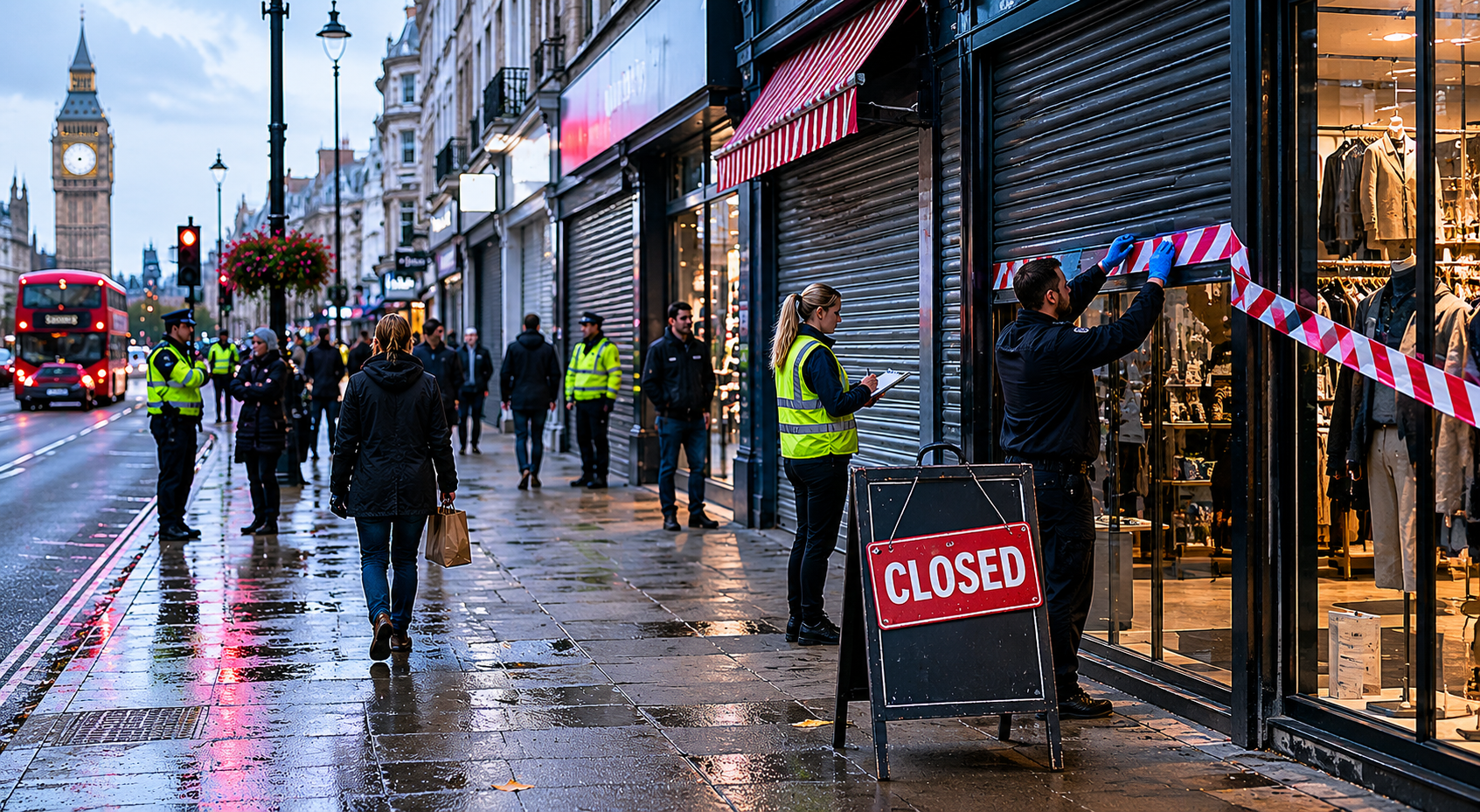
Britain’s high streets are to be swept clean of criminal infiltration under a major new government offensive, with organised gangs running barber shops, vape stores, mini-marts and sweet shops as fronts for money laundering set to face raids, closures and cash seizures on an unprecedented scale.
The Home Office has launched a dedicated High Street Organised Crime Unit — backed by £30 million in new funding — to bring together the National Crime Agency, police forces across England and Wales, Trading Standards and government departments in a coordinated drive against what officials describe as a growing threat to communities and legitimate businesses alike. Security Minister Dan Jarvis will oversee the new unit.
The scale of the problem it is designed to address is striking. The NCA estimates that at least £12 billion of criminal cash is generated in the UK each year, with around £1 billion of that laundered through high street businesses including mini-marts, barber shops, vape stores and sweet shops. Those same businesses have also been linked to the sale of counterfeit goods, illegal working and drug supply.
Of the £30 million allocated, £20 million will fund an enhanced law enforcement response, including a new multi-agency coordination cell operating out of the NCA. A further 75 officers will be recruited across the NCA, Greater Manchester Police, West Midlands Police and a joint Kent and Essex Police unit, building intelligence at a national level and intensifying enforcement on the ground. Trading Standards will receive an additional £6 million, directed at identifying suspicious businesses and stepping up action in the areas most affected.
The announcement builds on the results of Operation Machinize, the NCA-led operation that has been running for the past 18 months and is widely credited with exposing the extent of the problem. The second phase of the operation saw 2,734 premises visited and raided, 924 individuals arrested, more than £10.7 million in suspected criminal proceeds seized, and more than 450 companies referred to Companies House for further investigation.
The rapid expansion of such businesses has been particularly visible in areas such as Essex and Doncaster, where the number of barber shops has surged by 200 per cent in just five years. Investigators have found that these cash-intensive businesses are well-suited to concealing the proceeds of crime — a single premises can declare large cash turnovers that are impossible to verify without thorough scrutiny.
Detective Inspector Daniel Fenn, from West Mercia Police’s Economic Crime team, said some barber shops have claimed income of £100,000 to £150,000 a month, but simply do not command the number of customers to back up this level of income — a pattern all too familiar across Britain.
A report published by Trading Standards, titled Hidden in Plain Sight: Tackling Crime on the UK’s High Streets, identified Birmingham, Liverpool and London as the top three hotspots for organised crime groups operating through high street businesses, underlining the geographic reach of the problem.
Sal Melki, Deputy Director of Illicit Finance at the NCA, said organised crime operating on high streets “makes communities less safe and less prosperous.” He added that it “undermines legitimate business, deprives public services of tax revenues, and fuels a range of predicate offences such as the drugs trade, illicit goods, trafficking, and organised immigration crime.”
Home Secretary Shabana Mahmood was direct in setting out the government’s intent. “Criminal gangs have exploited our high streets to launder their dirty money and undercut honest businesses,” she said. “We are hitting back with a nationwide crackdown to shut these fronts down, seize dirty cash and drive organised crime off our high streets and put bosses behind bars.”
The retail industry has responded warmly to the announcement. Helen Dickinson, Chief Executive of the British Retail Consortium, said the new unit would be “welcome news for people across the country,” adding that stolen goods are “commonly funnelled through illicit supply chains and resold through unscrupulous businesses, helping fund further criminality.”
The Chartered Trading Standards Institute also welcomed the unit but urged the government to address the safety of its own officers, with chief executive John Herriman calling for an urgent review of enforcement powers and resources to better protect Trading Standards staff operating in these environments.
A rapid review has also been ordered to determine what additional legislative powers may be needed to shut rogue businesses down more quickly and for longer periods — a move Trading Standards has long called for, arguing that existing closure powers are insufficient to prevent criminal operators from simply relocating and reopening nearby. The pattern is well-documented: in Rochdale, one shop opened within three days of a neighbouring premises being shut down, with the same individuals supplying it with illegal tobacco from nearby cars and a block of flats.
The government has confirmed that thousands of businesses are expected to be investigated, with the national intensification campaign now placed on a permanent annual footing to drive coordinated enforcement across the country. For communities long aware of suspicious activity on their doorsteps but powerless to act, the message from the Home Office is clear: the era of hiding in plain sight may be coming to an end.
