




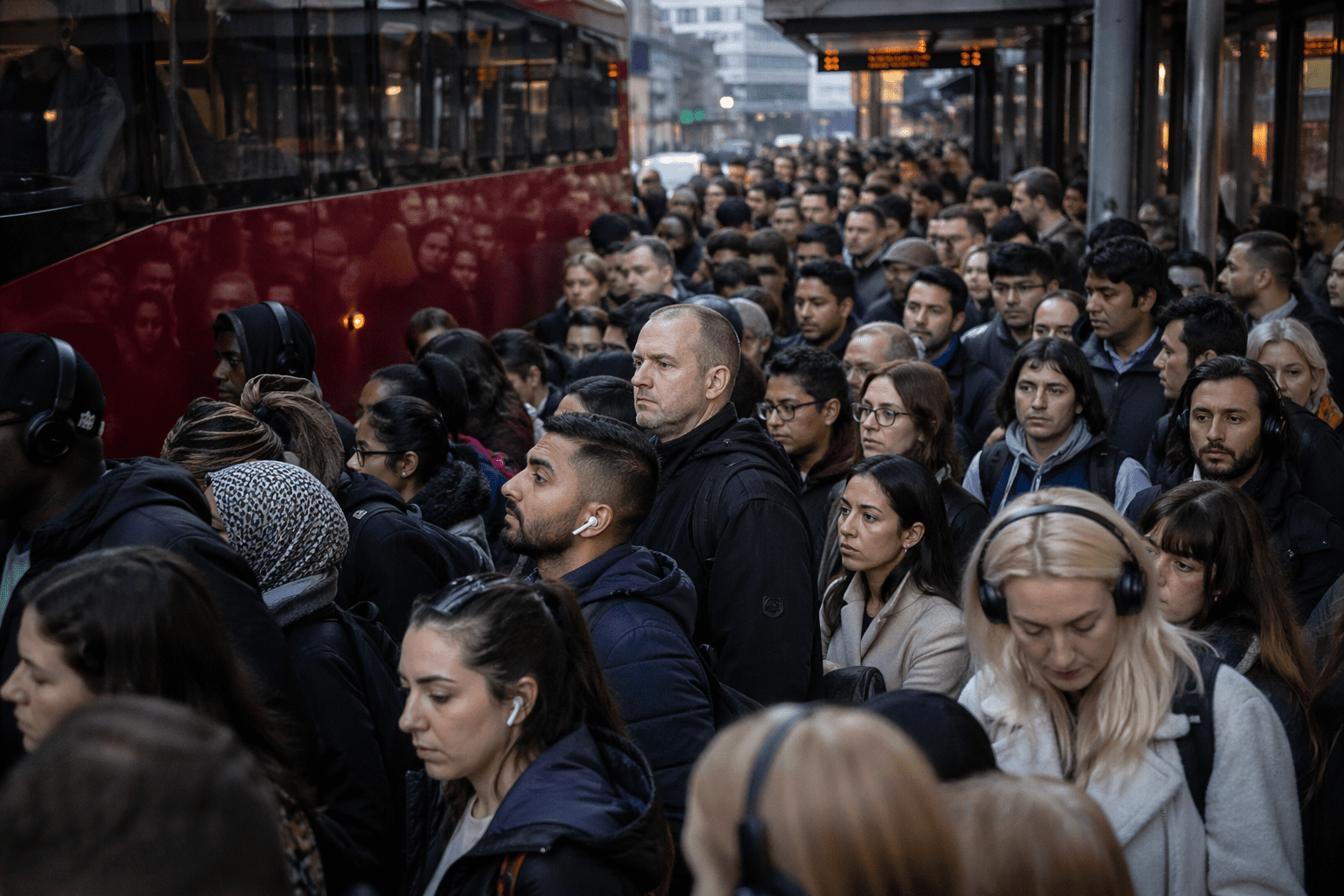
Four years of the same nightmare, four years of government silence and Londoners are done pretending this is normal
LONDON — Wake up, drag yourself out of a flat you can barely afford, check your phone, and see the news you already knew was coming: the Tube is out. Again.
For the millions of Londoners who spent Wednesday morning scrambling for alternative routes, squeezing onto packed buses, shelling out for Ubers they can’t afford, or simply giving up and working from a kitchen table, April 2026 feels like a grim rerun of 2025. And 2024. And 2023. And 2022.
The RMT union’s latest wave of strikes kicked off at midday on Tuesday 21 April and rolls on through Friday 24 April, with two 24-hour walkouts bookending a brief window of service in between. Most Tube lines didn’t begin running until 7.30am today, and the Piccadilly and Circle lines are shut entirely. The Metropolitan line is severed between Baker Street and Aldgate. The Central line has no trains through central London between White City and Liverpool Street. Thousands of commuters are stranded, late, furious — or all three at once.
And this is just the opening act. Further strikes are already locked in for 19–22 May and another round in June.
Same dispute. Same disruption. Same silence from government.
This time, the fight is over Transport for London’s plan to move train operators onto a compressed four-day working week a shift the RMT says will wreck sleep patterns, worsen fatigue, and compromise safety on one of the busiest metro systems on Earth. TfL insists the change is voluntary, involves no cut to contractual hours, and brings the Underground in line with most other UK train operators.
Train Operator salaries on the Tube reportedly sat at around £71,160 for 2024/25 — a figure that’s already ignited public debate about whether the strikes are about safety, shift patterns, or something else entirely.
But here’s the question Londoners keep shouting into the void: why, after four consecutive years of disruption, is there still no durable settlement?
A three-year pay deal agreed last year was supposed to buy industrial peace. It didn’t. Months later, a fresh dispute — this time over working hours — has brought the city back to its knees.
The real victims? Workers who can’t afford to miss a shift
London is the most expensive major city in Europe to live in. Rents in Zone 2 have climbed relentlessly. Childcare costs devour paycheques. Energy bills remain punishing. And for workers already stretched to the edge, a Tube strike is not a mild inconvenience — it is the difference between making rent and missing it.
- Retail and hospitality staff on hourly contracts lose pay when they can’t reach work.
- NHS workers, teachers and care assistants are forced into hour-long detours or expensive taxis.
- Small business owners watch footfall collapse for days at a time.
- Parents miss nursery pickups because a 20-minute commute has turned into 90.
The people paying the highest price for this dispute are almost never the ones at the negotiating table.
A government missing in action
For more than four years, commuters have watched the same cycle play out: dispute, ballot, walkout, chaos, temporary truce, repeat. Ministers issue statements. TfL issues statements. The RMT issues statements. Nothing structural changes.
Where is the legislation to modernise dispute resolution? Where is the long-term funding settlement for TfL that would end the annual scramble over budgets? Where is the serious conversation about a London that actually works for the people who keep it running — the cleaners, the nurses, the delivery drivers, the baristas, the teachers — who cannot simply “work from home” when the network collapses?
A city this important deserves leadership that treats transport as critical national infrastructure, not as a political football to be kicked between mayoral and national offices whenever it’s convenient.
What Londoners are saying
Across social media today, the mood is not sympathy for either side. It is exhaustion. The hashtag-powered rage of 2022 has curdled into something colder: a quiet, worn-out resignation that nobody in power is actually going to fix this.
“I don’t care who’s right anymore. I just want to get to work,” one commuter posted on X this morning — a sentiment echoed thousands of times over.
The bottom line
London cannot keep doing this. Not to its workers. Not to its economy. Not to its reputation.
Until the government, TfL and the unions are forced to build a lasting framework — one that protects worker welfare and guarantees commuters the transport system they pay dearly for — the strikes will keep coming. The headlines will keep repeating. And the people who can least afford it will keep paying the price.
Four years in, the real strike isn’t on the rails.
It’s on the patience of an entire city.
Tube strikes continue through Friday 24 April, with further action scheduled for 19–22 May and dates in June. Commuters should check TfL’s journey planner before travelling. The Elizabeth line, DLR and most Overground services are running as normal, though significantly busier.
