




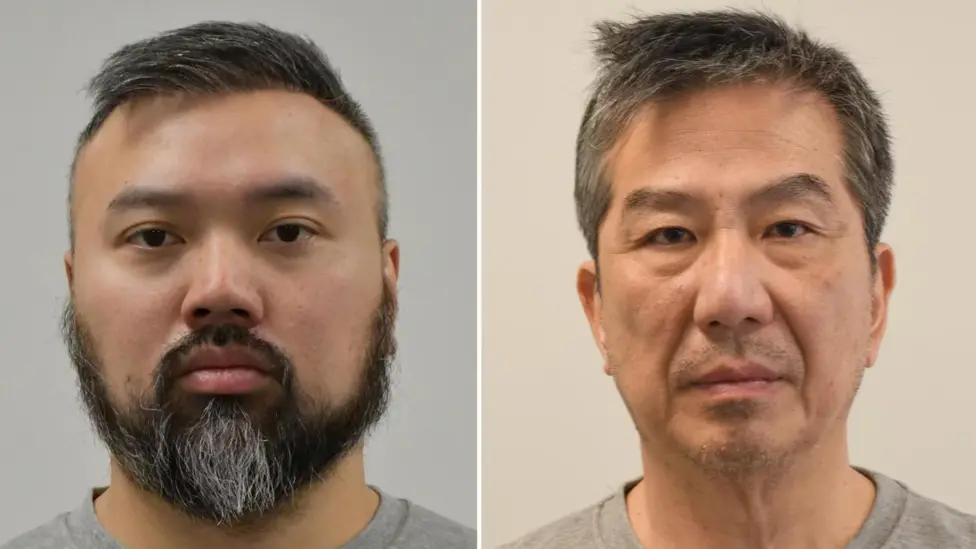
A British immigration officer who exploited his position at Heathrow Airport to track Hong Kong pro-democracy activists on behalf of Chinese intelligence has been convicted at the Old Bailey, in a case that has prompted the Foreign Office to summon Beijing’s ambassador to London.
Chi Leung “Peter” Wai, 40, a Border Force officer and former Royal Navy sailor, was found guilty of assisting a foreign intelligence service under the National Security Act, alongside his handler Chung Biu “Bill” Yuen, 65, a retired Hong Kong police superintendent who managed the Hong Kong Economic and Trade Office (HKETO) in London. Wai was additionally convicted of misconduct in a public office.
The pair, both dual British-Hong Kong nationals, ran what prosecutors described as a “shadow policing” operation against Hong Kongers who had fled to Britain after the crackdown on the city’s 2019 pro-democracy protests. They referred to their targets in messages as “cockroaches”.
The verdict followed a two-month trial before Mrs Justice Cheema-Grubb. According to the PA news agency, the jury deliberated for 23 hours and 38 minutes before returning its decision. The panel was unable to reach a verdict on a separate charge of foreign interference, and the Crown Prosecution Service confirmed it would not seek a retrial.
In response to the convictions, the Foreign Office summoned the Chinese ambassador to the United Kingdom, Zheng Zeguang, for a formal protest. Both defendants were remanded in custody and will be sentenced on 15 May.
Wai’s job at the Border Force, which he took up in December 2020, gave him access to the Home Office’s Atlas database, an extensive record of foreign nationals living in the UK. He used the system on his days off and on sick leave to dig up information on Hong Kong dissidents on behalf of his Chinese contacts, the court was told. There appeared to have been no checks in place to prevent him from doing so.
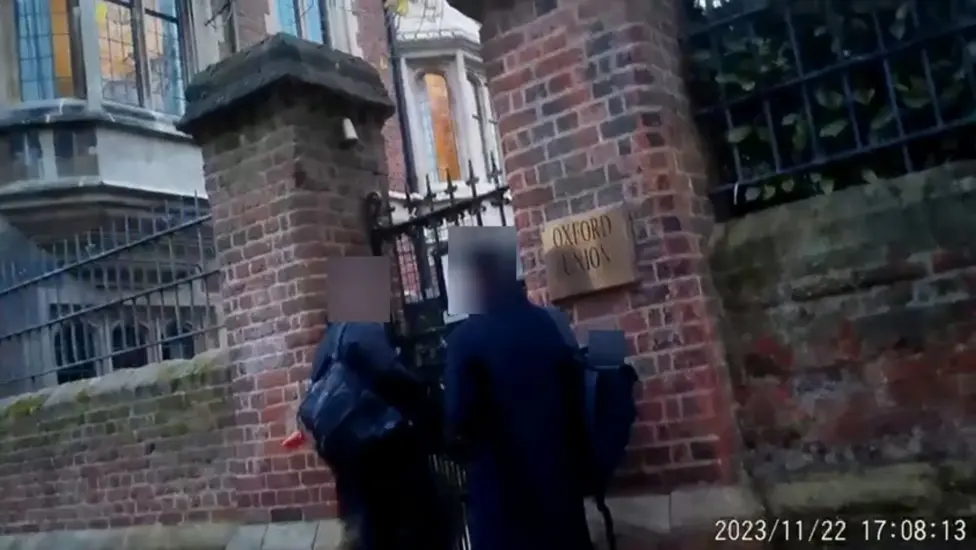
Among those targeted was the high-profile activist Nathan Law, who carries a HK$1 million (around £95,000) bounty placed on his head by Hong Kong authorities. Law was photographed by Wai’s group as he left a speaking engagement at the Oxford Union in November 2023. Another bounty target, Finn Lau, was also placed under surveillance. Lau told the BBC that he no longer felt safe in the UK and had taken to deploying “anti-following tactics” when out in public.
The court heard that “special attention” was paid to British politicians, including the senior Conservative MP Sir Iain Duncan Smith, who co-chairs the Inter-Parliamentary Alliance on China. Yuen instructed Wai to focus on parliamentarians and government employees who had been critical of Beijing.
The conspiracy unravelled following an audacious operation to track down a Hong Kong woman, Monica Kwong, who had relocated to a flat in Pontefract, West Yorkshire, with her young son. Kwong had been accused — accusations she has firmly denied — of involvement in a £16 million fraud while working as a personal assistant in Hong Kong.
Using the Atlas system, Wai pinpointed her address. He confirmed she was living there by arranging a fake parcel delivery, before mounting a surveillance operation alongside fellow Border Force officer Matthew Trickett, a former Royal Marine. On 30 April 2024, a group flew in from Hong Kong led by Tina Zou, the woman alleging fraud, accompanied by ex-Hong Kong police officers.
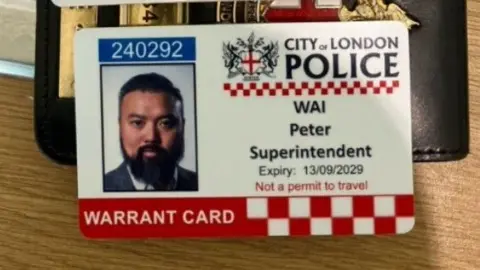
The team’s tactics in Pontefract were, by turns, comical and sinister. They used a “snake camera” to film beneath Kwong’s front door. Trickett left a note pretending to be “Dave from maintenance” and poured water under the door, claiming a leak. On 1 May, the group forced their way into the flat, only to discover it empty. By then, MI5 had been alerted and had bugged the property; every word was being recorded. When officers swooped in, Wai threw a fake warrant card identifying him as a superintendent in the City of London Police out of a window.
Trickett, who had been charged alongside Wai and Yuen, was found dead in Grenfell Park, Maidenhead, in a suspected suicide shortly after their first court appearance. His inquest is scheduled for November.
Wai’s career had spanned an unusually wide range of uniforms. He served eight years in the Royal Navy, was a Metropolitan Police officer between 2015 and 2019, and went on to become a volunteer special constable with the City of London Police. He also ran his own private security business, D5 Security, and provided event security in London’s Chinatown. Acquaintances knew him by the nickname “Fatboy”.



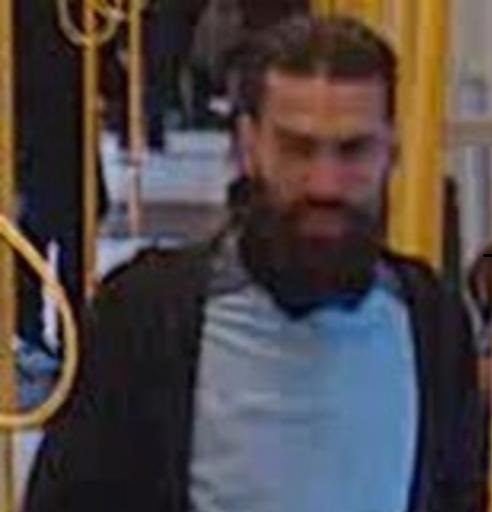
Yuen had moved to London in 2015, days after retiring from the Hong Kong Police Force, joining his wife and children in the capital. He soon began working at HKETO, an office originally set up to promote trade ties between Hong Kong and the UK but which, the prosecution said, became increasingly politicised after the 2019 protests. He and Wai were introduced at a Chinatown restaurant in 2017 by Chu Ting Tang, a local figure said to be sympathetic to Beijing’s policies.
Cdr Helen Flanagan, head of Counter Terrorism Policing London, said the activities of the two men had been “both sinister and chilling”. Bethan David, head of the CPS counter terrorism division, said the convictions sent a “clear message” that transnational repression and foreign interference would “not be tolerated on British soil,” adding that the conduct had been “deliberate, co-ordinated and carried out with full knowledge of who it would benefit.”
The case has reignited concerns about the reach of so-called Operation Fox Hunt and Operation Sky Net — Chinese government initiatives announced to track down individuals deemed fugitives — and about Beijing’s willingness to project policing power into democratic states. In 2023, Hong Kong’s chief executive John Lee Ka-chiu placed HK$1 million bounties on a number of pro-democracy campaigners, declaring they would be pursued “for life”.
For Britain, the conviction of a serving Border Force officer also raises uncomfortable questions about how a member of staff with access to one of the most sensitive databases in government was able to mine it on behalf of a foreign state, seemingly without any safeguard tripping an alarm. Those questions are likely to dominate the political fallout in the days ahead.
