




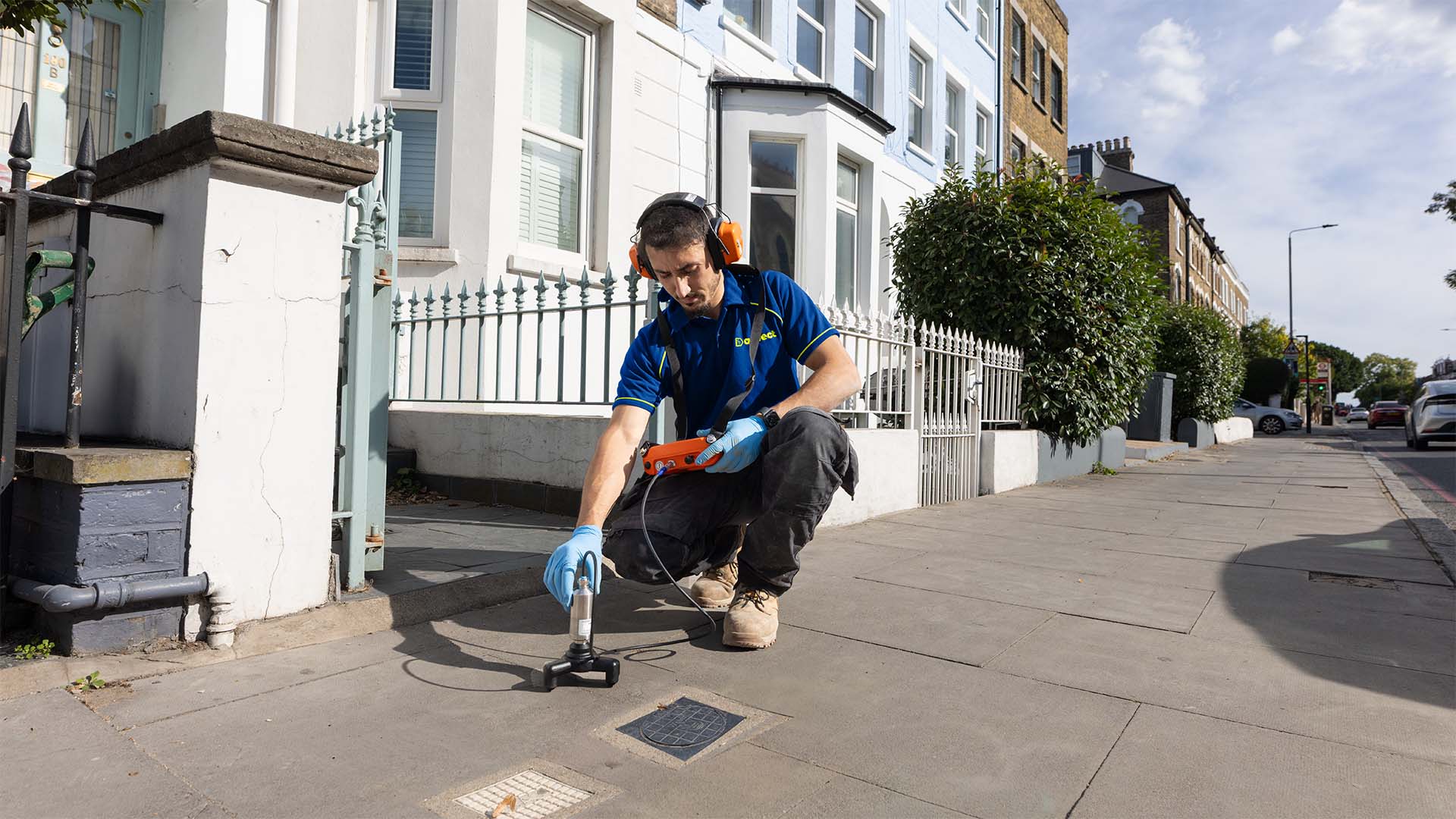
Londoners already squeezed by rising energy, council tax and transport costs could be paying hundreds of pounds a year extra on their water bills without realising it — and the culprit is often buried under their own front garden.
New analysis of more than 9,000 leak callouts across the capital and the South East suggests that nearly six in ten hidden household water leaks are happening not in the bathroom or kitchen, but in the underground supply pipes that run between the water main and the front door. These pipes are the homeowner’s responsibility, not the water company’s — and because they sit under driveways, paths and lawns, a leak can run for months before anyone notices.
According to the figures, compiled by London property maintenance firm Aspect, the average hidden leak wastes around 56 litres of water an hour. That works out at more than 40,000 litres a month — roughly the equivalent of 500 full bathtubs quietly disappearing into the soil. At current London metered rates, that translates to an extra £150 to £160 on a monthly bill in a typical case, and £200 to £250 in severe ones. Left unresolved for a year, the cost can top £2,400.
Where the leaks are actually happening
The breakdown of callouts paints a clear picture of where homeowners should be looking:
- 58% — mains supply pipes (underground, outside the home)
- 16% — heating and hot water systems
- 8% — bathrooms
- The remainder linked to building fabric, gas and drainage
It is the first category that tends to catch people out. Most households instinctively check taps, loos and under-sink pipework when a bill looks off. Far fewer think to check the stretch of pipe running beneath their own front garden — partly because they cannot see it, and partly because many are unaware it is legally theirs to fix.
The London factor
The problem is particularly acute in the capital, where a significant proportion of the housing stock dates from the Victorian and Edwardian eras and still relies on ageing external pipework. Dense terraces, shared boundaries and decades of street works also mean buried pipes in London are under more stress than in newer developments elsewhere.
Ground movement is another accelerant. Soil expands in the wet winter months and shrinks as the weather warms and dries, and that seasonal flex puts strain on older joints and pipe runs. Leaks that were already there often become noticeably worse in spring and summer.
Real cases
Among the recent London callouts cited in the analysis:
- A homeowner whose monthly water bill jumped from £100 to £657, traced to a leak in an external pipe beneath the front garden.
- A property losing more than 7,000 litres of water a day with no visible sign of a problem anywhere inside the house.
- Homes where the water meter kept ticking over even after the internal stopcock was turned off — a classic sign that the leak sits on the supply side, outside the property.
How to spot one
Because external supply-pipe leaks rarely announce themselves with a damp patch or a dripping sound, the warning signs tend to show up on paperwork rather than in plain sight. Things to watch for:
- A sudden or unexplained jump in your water bill
- Alerts from your supplier flagging continuous usage
- The water meter running when nothing inside the home is switched on
- A persistent drop in water pressure
- No visible leaks anywhere inside the property despite the above
Neil Lampton, leak detection manager at Aspect, said external leaks were often the hardest category to pin down. “Hidden leaks outside the home are often the hardest to identify, as they develop underground with no visible signs. In London, where many properties rely on older external pipework, these issues can go unnoticed for long periods,” he said.
He added that greater awareness of supply pipes as a high-risk area could save households money, “particularly as responsibility for these pipes typically sits with the property owner rather than the water provider.”
What to do if you suspect one
If the warning signs above sound familiar, the first practical step is the stopcock test: turn off the internal stopcock and check whether the water meter is still moving. If it is, the leak is almost certainly on the external supply pipe. Your water company can usually advise on next steps, and some offer limited support or insurance-backed repairs for first-time leaks — it is worth checking your supplier’s policy before calling out a private specialist.
Figures in this article are based on analysis of more than 9,000 leak-detection callouts carried out by Aspect across London, the South and the East of England in the 12 months from March 2025. Cost estimates use average London metered rates.
