

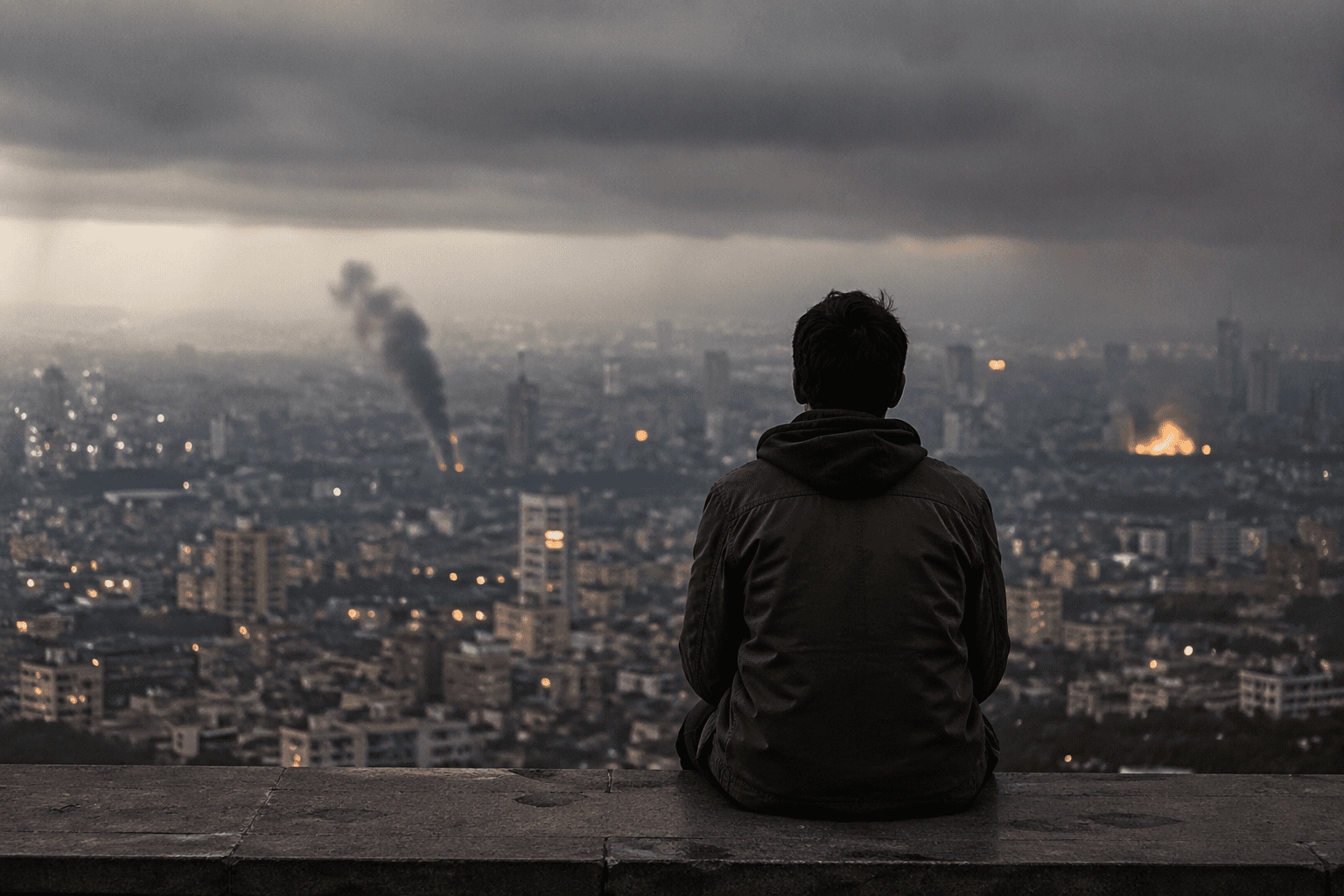
The rent is impossible. Groceries cost double. Services are broken. New laws strip rights that took a century to win. And yet the streets are quiet. Here’s the uncomfortable truth about why.
Something has gone very wrong with us, and almost nobody wants to say it out loud.
Look around. Prices have detached from wages in a way that would have sparked riots in any previous decade. Healthcare systems, trains, post offices, hospitals — the basic machinery of modern life — work worse every year while costing more. Governments pass surveillance laws, emergency powers, and “public order” acts that would have horrified our grandparents. Inequality is now a statistical obscenity.
And what do we do?
We tap. We scroll. We post a story. We move on.
There are serious people studying exactly this collapse of civic pushback — researchers at Carnegie Endowment’s Global Protest Tracker and International IDEA’s Global State of Democracy report document protests in pockets of the world (Nepal, Kenya, Serbia, Madagascar), but the working and middle classes of the wealthy West, who have the most tools to resist and the least excuse not to, have gone strangely docile. I want to talk about why.
This is not a nostalgic rant about “young people today.” This is an argument that we’ve been systematically engineered into paralysis — and it’s working.
1. You’re not lazy. You’re exhausted on purpose.
The single most effective tool for killing political resistance is not a police baton. It’s a double shift. It’s a rent increase. It’s a medical bill.
A population that is scared of missing one paycheck does not organize. It survives. The precarity economy — gig work, expiring contracts, impossible housing costs — is not a bug of late capitalism. It is a feature that makes collective action almost physically impossible. You cannot go to a Wednesday afternoon demonstration when missing four hours of work means you can’t feed your kid on Friday.
Your ancestors could strike because they had solidarity and stability. You have neither. That is not an accident.
2. The algorithm converts your rage into content.
This is the part almost nobody wants to hear.
When you see something infuriating online — a corrupt minister, a price hike, a police beating — what do you do? You share it. You comment. Maybe you post a long, righteous thread. And then you feel… a little better. A little lighter. Something has been “done.”
Nothing has been done.
Researchers call this slacktivism, and the newer, darker name for what happens next is digital learned helplessness. A study published in the journal Democratization describes how the flood of contradictory, AI-amplified, emotionally exhausting information pushes citizens toward “informational agnosticism” — a fancy term for I don’t know what’s true anymore and I’ve stopped trying.
The Center for a New American Security put it even more bluntly in their report Digital Threats to Democracy: Comfortably Numb — we now witness every global horror in real time, with no tools to act on any of it. So we stop feeling. Not because we are heartless. Because we are saturated.
The algorithm has learned something terrifying: your outrage is profitable, as long as it stays on the platform. The moment it would threaten to become a street, a strike, or a ballot, the algorithm quietly feeds you a dance video.
3. Protest has been criminalized while you weren’t looking.
This one deserves rage.
Across the supposedly free world, quietly, piece by piece, the legal cost of dissent has been raised. Protest permit requirements. Anti-mask laws. “Domestic extremism” databases. Facial recognition at marches. Civil lawsuits against organizers. Emergency legislation that was supposed to expire and never did.
The 2025 Global Rights Project report from the University of Rhode Island documents it clearly: governments are increasingly using surveillance and legal pressure to chill dissent before it starts. You don’t need to ban protest when you can make one arrest cost someone their job, their housing, and their next visa application.
We have drifted into a system where the legal risk of showing up has quietly become higher than the political risk of doing nothing. Tyranny doesn’t need tanks when it has HR departments and credit checks.
4. We are alone in a way humans were never designed to be.
A century ago, if your wages were cut, your neighbors were cut with you. You saw them on the stoop. You drank with them. You went to the same church, same union hall, same pub. Outrage was a group experience.
Now, your suffering is private. You are angry alone in your apartment, scrolling alone, eating alone, earning alone. You don’t know your neighbors’ names. The union is a historical concept. The church is a meme. The pub closed.
Protest is not, fundamentally, a political act. It is a social one. It requires people who already trust each other. We have destroyed the infrastructure of trust — and then we wonder why nobody shows up.
5. We have been sold the lie that voting is enough.
Every four or five years, we’re told the ballot is the ultimate expression of our voice. Go vote. Good citizen. Done.
But history’s real changes — labor rights, civil rights, women’s suffrage, the end of colonialism — were not won at the ballot. They were won in the street, on the picket line, in jail cells. Voting came after. Voting ratified what the streets had already forced.
A population that believes voting is the full menu of its political power is a population that has been housebroken.
So what now?
I am not going to end this with a neat little “five tips to be a better activist.” That would be an insult to the scale of what’s happening.
But I will say this:
The silence is not natural. It is manufactured. Every hour you spend exhausted, scrolling, distracted, or alone is an hour the current system was designed to extract from you. Recognising that is the first, smallest act of resistance.
Talk to your neighbor. Join one local thing — a tenants’ union, a community group, a parents’ association, anything physical and face-to-face. Cancel one streaming subscription and put the money toward an organization that actually fights for something. Get off the app that makes you feel the angriest and the most helpless at the same time.
The system is not invincible. It just needs us to believe it is.
And the most radical thing any of us can do right now is to stop being comfortably numb.
If this piece made you uncomfortable, good. Share it with the one person in your life who still remembers what it felt like to believe things could change. That’s how silence breaks.
